The AGS Energy Biomass Gasifier – Cools Everything Without Electricity
In hot climates, the demand for reliable and energy-efficient cooling systems is critical, particularly in industries and data centres where temperature control is essential for operations. Traditional cooling systems, which rely heavily on electricity from the grid, contribute significantly to energy consumption and greenhouse gas emissions. The AGS Energy Gasifier, when integrated with an absorption chiller, offers a sustainable and efficient solution for producing chilled air, aligning with modern environmental goals while meeting industrial cooling needs.
INTRODUCTION:
Technical Benefits
- Efficient Energy Conversion
- Syngas Production: The AGS Energy Gasifier converts organic waste into syngas through a controlled gasification process. This syngas is a versatile fuel that can be used for various energy applications, including driving an absorption chiller.
- Heat Utilisation: The thermal energy produced during syngas combustion can be directly harnessed to power an absorption chiller. This process avoids the inefficiencies associated with converting energy into electricity first, allowing for a more direct and efficient use of heat.
- High Reliability and Scalability
- Adaptable to Various Scales: The gasifier system is scalable, making it suitable for both small and large applications, including industrial facilities and data centres. The modular design allows for capacity adjustments based on cooling demand.
- Continuous Operation: The gasifier can operate continuously with a consistent feedstock supply, providing a stable source of energy for cooling. This reliability is crucial for data centres and industrial operations that require uninterrupted cooling.
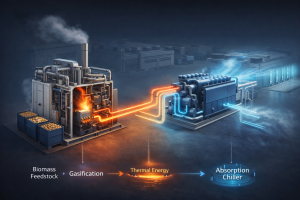
- Integration with Absorption Chillers
- Absorption Chiller Compatibility: The thermal energy from the gasifier can efficiently drive an absorption chiller, which uses heat instead of electricity to produce chilled water. This chilled water can then be circulated through air handling units to provide cooling.
- Reduced Dependency on Grid Electricity: By using thermal energy from the gasifier, facilities can reduce their reliance on electricity from the grid for cooling, leading to lower operational costs and increased energy security, especially in regions with unstable power supplies.
- Waste to Energy Conversion
- Versatile Feedstock: The AGS Energy Gasifier can process a wide range of organic materials, including vegetation, animal slurries, and biomass wastes. This flexibility in feedstock use allows industries to utilise local waste streams efficiently, converting them into valuable energy.
- High Energy Efficiency: The system maximises energy recovery from waste, with the potential to produce both electricity and chilled air. This combined heat and power (CHP) approach enhances overall system efficiency.
Environmental Benefits
- Reduced Greenhouse Gas Emissions
- Carbon-Neutral Energy: The use of biomass and organic waste in the gasifier is considered carbon-neutral, as the CO2 released during combustion is offset by the CO2 absorbed by the plants during their growth. This contributes to a reduction in overall greenhouse gas emissions compared to fossil fuel-based energy systems.
- Methane Emission Avoidance: Organic waste, when left to decompose, produces methane—a potent greenhouse gas. By converting this waste into syngas and biochar through gasification, methane emissions are significantly reduced.
- Sustainable Waste Management
- Waste Reduction: The gasifier helps divert organic waste from landfills, reducing the environmental impact of waste disposal. This is particularly beneficial in regions where waste management infrastructure is limited.
- Biochar Production: In addition to syngas, the gasification process produces biochar, a stable form of carbon that can be used as a soil amendment to enhance soil fertility and sequester carbon.
- Lower Water Usage
- Absorption Chiller Efficiency: Absorption chillers typically use less water compared to conventional cooling towers associated with electric chillers, making them more suitable for arid regions where water conservation is critical.
- Reduced Environmental Footprint: The combination of lower water usage and reduced electricity demand leads to a smaller environmental footprint, aligning with sustainability goals.
- Support for Circular Economy
- Resource Recovery: The gasifier supports a circular economy by recovering energy from waste materials that would otherwise be discarded. This contributes to resource efficiency and sustainable development.
- Local Energy Production: By utilising local waste materials, the system reduces the need for imported fuels, supporting local economies and reducing the environmental impact associated with fuel transportation.
Applications in Hot Climates
- Industrial Cooling
- Process Cooling: Industries in hot climates, such as manufacturing and food processing, can benefit from the reliable and efficient cooling provided by the gasifier-absorption chiller system. The system can handle the high cooling loads typically required in these sectors.
- Energy Cost Savings: The reduction in electricity consumption for cooling can lead to significant cost savings, making industrial operations more competitive in energy-intensive markets.
- Data Centres
- Critical Temperature Control: Data centres, which require precise temperature control to ensure the reliability of servers and other IT equipment, can achieve high efficiency and sustainability through this system. The gasifier provides a steady source of energy, while the absorption chiller delivers consistent cooling, essential for data centre operations.
- Enhanced Energy Security: In regions with frequent power outages or limited grid reliability, the gasifier system provides a secure and resilient cooling solution, ensuring uninterrupted data centre operations.
Conclusion
The AGS Energy Gasifier, when integrated with an absorption chiller, offers a highly efficient, sustainable, and reliable solution for producing chilled air in hot climates. This system not only addresses the critical need for cooling in industries and data centres but also contributes to environmental sustainability by reducing greenhouse gas emissions, supporting waste management, and promoting energy efficiency. As the demand for cooling continues to rise in hot regions, the adoption of such innovative technologies will be key to meeting both economic and environmental goals.
#climatchange #chilledair #airconditioning #efw #AGSEnergy #sustainability #energyfromwaste #greenhousegasemissions #innovation #biochar #sustainablewastemanagement