Every day, the NHS works tirelessly to protect lives and care for communities. But behind the scenes, it faces a growing challenge — the sheer volume of healthcare waste produced across hospitals and clinical settings. This Blog Post shows how Harrogate NHS are planning to meet it’s Net Zero Carbon 2040 Target, deploying an AGS Energy Waste Treatment Solution.
In England alone, over 160,000 tonnes of clinical waste is generated each year. Much of it is transported long distances for treatment using energy-intensive, carbon-heavy processes.
This means rising costs, increasing emissions, and lost opportunities for sustainability.
Waste is moved away, burned, or buried — creating pollution instead of value.
But what if NHS waste could become part of the solution rather than part of the problem?
This is where AGS Advanced Thermal Recovery technology is changing the future of healthcare sustainability.
Instead of relying on distant treatment facilities, AGS allows NHS Trusts to treat healthcare waste locally. Through advanced waste-to-energy recovery, suitable NHS waste streams are converted into clean, usable heat energy — providing hospitals with secure, continuous power while dramatically reducing carbon emissions.
At Harrogate District NHS Foundation Trust, modelling shows this technology could reduce clinical waste treatment emissions by around 33 percent, alongside major reductions in diesel transport miles.
Harrogate is positioned to become the first NHS Trust in the UK to deploy this innovative system — leading the nation in the move from a linear waste system to a closed-loop circular economy.
This isn’t just about technology.
- It’s about protecting the environment for future generations.
- It’s about strengthening the resilience of our hospitals.
- It’s about turning a costly problem into a sustainable asset.
With AGS, waste no longer leaves the NHS as a burden — it stays within the system as a resource.
The recovered thermal energy supports hospital heating and hot water systems around the clock, reducing reliance on fossil fuels, lowering energy bills, and protecting against volatile energy markets.
At a time when energy security has never been more important, this provides hospitals with stability, reliability, and peace of mind.
Local treatment also means fewer lorries on the roads.
No more unnecessary long-distance transport of hazardous healthcare waste.
No more diesel emissions adding to climate change.
No more fragile supply chains vulnerable to disruption.
Instead, the NHS gains a cleaner, safer, and more resilient waste management solution.
But the benefits go even further.
AGS systems create skilled green jobs within local communities — from plant operators and engineers to maintenance teams and technical specialists. They help build long-term expertise in sustainable infrastructure while keeping investment within the UK economy.
And the environmental outputs tell a powerful story of circular economy success.
Where suitable organic waste is present, AGS produces biochar — a carbon-rich material that locks carbon away for decades, improves soil health, and supports sustainable agriculture.
Where biochar is not viable, the system generates a stable, non-hazardous green ash that can be reused in eco-friendly construction materials, helping build the UK’s future infrastructure sustainably.
Nothing is wasted.
Everything has value.
This is what a closed-loop NHS waste system looks like.
From waste… to energy.
From emissions… to solutions.
From cost… to opportunity.
Harrogate NHS is set to become the UK’s lighthouse project — proving how healthcare waste can support carbon reduction, energy resilience, and environmental responsibility.
And this opportunity extends across NHS England, Wales, Scotland and Northern Ireland.
AGS technology aligns directly with NHS Net Zero targets, national decarbonisation strategies, and the transformation of public services toward a greener future.
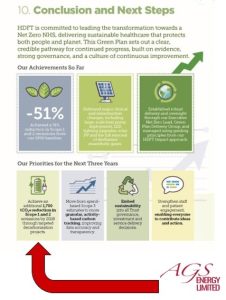
The message is clear.
The NHS currently pays to dispose of a growing problem.
With AGS, it can instead create:
Lower carbon emissions
Secure local energy
Skilled green jobs
Greater hospital resilience
Positive environmental impact
Better value for taxpayers
This is not just waste treatment.
It is smart, sustainable infrastructure for the future of the NHS.
#NHSSustainability #NHSNetZero #WasteToEnergy #CircularEconomy
#HealthcareDecarbonisation #GreenNHS #SustainableHealthcare
#CarbonReduction #RenewableEnergy #HospitalEnergy #ClimateAction
#GreenInfrastructure #Biochar #CleanEnergyUK #SustainableFuture